

Advertiser Disclosure: This page contains affiliate links. We may receive compensation with no additional cost to you. Learn more.
Best Business Credit Cards for Software and SaaS Subscriptions in 2026
Two things decide the best business credit cards for software and SaaS subscriptions, and only one is the earn rate: the other is whether you can see thirty recurring charges clearly enough to cancel the dead ones. American Express Business Gold Card covers U.S. purchases from select technology providers at 4x, rotated in automatically. Capital One Venture Business pays 2x miles on every charge, which suits a stack no issuer categorizes consistently. Ramp earns cash back and, more usefully, gives each subscription its own virtual card with a hard limit. The Blue Business Plus Credit Card from American Express pays 2x on everything with no annual fee, the low-friction default. U.S. Bank Triple Cash Rewards Visa Business Card carries an annual statement credit specifically for recurring software subscriptions. For most agencies, visibility saves more than any multiplier earns.
How We Picked These Software Cards
Software spend is different from other categories in one way that matters: it renews silently. So we weighted three things. Whether the card actually treats technology or software as a bonus category rather than dumping it in the 1x pile. Whether the card issues per-vendor controls, because a subscription nobody can see is a subscription nobody cancels. And whether recurring charges are protected when a card number changes. Cards appear alphabetically, not in ranked order. Terms move, so verify with the issuer.
The 5 Best Business Credit Cards for Software and SaaS Subscriptions
Business Gold
Business Gold

U.S. purchases from select technology providers is one of six categories on this card, and it is the one that fits a software-heavy business. Amex applies 4x Membership Rewards to your two highest-spend categories each cycle automatically, so a month with an annual enterprise renewal in it becomes a 4x month without any action from you. That suits software spend precisely, because renewals cluster and then go quiet. The 4x runs to a combined annual cap across both categories before dropping to 1x. Two things to weigh. The card has no foreign transaction fee, which matters more here than most people expect given how many SaaS vendors bill from Ireland or Australia. But employee cards are not free, so giving your ops lead a card to manage renewals has a price. Best when your technology spend is the largest line you have.
Venture Business
Venture Business

Software is where category cards fail, because vendors code inconsistently and half your stack ends up in the merchant category equivalent of a shrug. This card sidesteps that by paying 2x miles on every purchase, no categories, no enrollment, no cap. Your Slack invoice, your AWS bill and the obscure API tool your developer expensed all earn identically. There is no foreign transaction fee, useful for the non-U.S. vendors that make up more of a modern stack than people realize, and employee cards are free, so procurement can be distributed without cost. Miles transfer to more than fifteen airline and hotel partners, so a software budget quietly funds travel. The tradeoff is that 2x will never beat a working 4x category, so this is the choice for messy stacks rather than concentrated ones. Note also that Capital One reports most business cards to the owner's personal credit.
Ramp
Ramp is not really competing on earn rate, and treating it as a rewards card misses what it does. It is a corporate charge card with expense management built in: virtual cards issued per vendor, per-employee spend controls and receipt capture, which means every SaaS subscription can sit on its own card with its own ceiling. Cancel the tool and you kill the card, and a vendor who quietly raises a renewal simply gets declined. That is the strongest answer on this page to the problem of the forgotten seat. There is no annual fee, no personal guarantee and no personal credit check. The floors are real and they disqualify plenty of readers: a US business bank account holding roughly $25,000 or more held consistently, a formally registered entity, and a physical US address. Sole proprietors and unregistered businesses are not eligible.
Blue Business Plus
Blue Business Plus
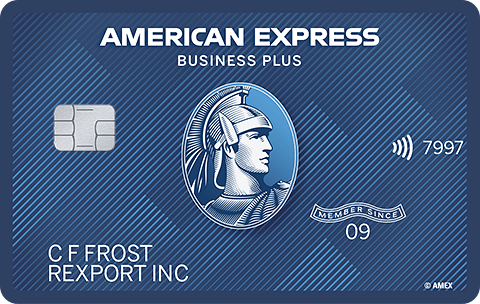
This is the least demanding card in the category and often the right one. Every purchase earns 2x Membership Rewards up to an annual spending cap, then 1x, with no annual fee at all, which means a business paying for eighteen tools does not need to check whether any of them qualify for anything. Points are transferable rather than a fixed cash rebate, so the software budget converts into travel if you want it to. There is also an intro 0% APR period on purchases, which lines up neatly with the annual-plan discount most vendors offer for paying twelve months upfront. Watch two things: the foreign transaction fee, which is a genuine cost when your vendors bill in euros or pounds, and the annual cap, which a large stack will reach. Best for the small team that wants one card and no maintenance.
Triple Cash Rewards Visa Business
Triple Cash Rewards Visa Business
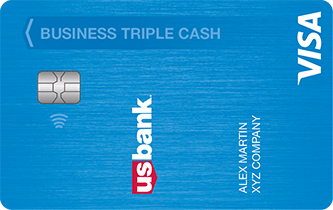
No other card on this list names software directly, and this one does: an annual statement credit for recurring software subscriptions, with accounting platforms like QuickBooks and FreshBooks specifically in scope. That is a fixed offset against a fixed cost, which is a cleaner outcome than a points balance. On top of that, 3% cash back applies to cell phone service providers, office supply stores, gas and EV charging stations and restaurants, so the surrounding overhead of running a software-dependent business earns as well. There is no annual fee, employee cards are free, and there is an intro 0% APR period on purchases. The limitation is international: this card charges a foreign transaction fee, which is a poor match for a stack full of overseas vendors. Best for a U.S.-billing business that wants a credit rather than a currency.
How to Choose a Business Credit Card for Software Spend
Count your foreign-billed vendors before anything else. A surprising share of SaaS bills from Ireland, the UK or Australia, and a foreign transaction fee on those charges will quietly outweigh the difference between 2x and 3x. If more than a few of your tools bill in another currency, restrict yourself to cards with no foreign transaction fee and let that decide it.
Weigh control against rate. The average business with thirty subscriptions is paying for at least a few it stopped using. Recovering those beats an extra point per dollar by a wide margin, and only cards with per-vendor virtual cards and spend controls make that visible. Rate matters at high volume; control matters at high vendor count.
Look at how renewals survive a reissue. A lost or replaced card breaks every recurring charge attached to it, and reconnecting thirty vendors is a bad afternoon. Some issuers push updated numbers to merchants automatically, and virtual cards isolate the damage to one vendor.
Business Software and SaaS Card Questions
Do SaaS subscriptions count as a software bonus category?
Sometimes, and it depends on how the vendor is classified rather than what it sells. American Express Business Gold defines the category as U.S. purchases from select technology providers, which is narrower than all software. Hosting, agency retainers and marketplace-billed tools often code as something else entirely. If your stack is scattered, a flat-rate card avoids the guessing.
Can I put annual software plans on a business card?
Yes, and paying annually usually earns a vendor discount on top of whatever the card pays. The risk is concentration: a year of renewals landing in one month can strain a credit limit. A card with an intro 0% APR period on purchases spreads that, but the period ends, and the balance does not care.
Which card is best for tracking employee software spend?
Ramp, if you clear its requirements, because per-employee controls and per-vendor virtual cards let you see exactly who authorized what. Among mainstream issuers, free employee cards on Capital One and U.S. Bank business cards make department-level tracking workable at no extra cost.
When a Card Is the Wrong Tool for Software Spend
A card handles subscriptions well and handles a platform migration badly: implementation fees, parallel licensing and the contractor hours to move the data all land at once, before the efficiency shows up. If that's the size of what you're facing, we at Quordx can match you with term loans, lines of credit and working capital from 50+ vetted lenders, with funding possible in as few as 3–7 business days, and using us costs you nothing.
---
Advertiser Disclosure: This page contains affiliate links. We may receive compensation with no additional cost to you. Learn more.
Every figure on this page was verified in August 2026. Card terms change without notice — confirm current terms on the issuer’s official application page before applying.
Explore more best-of lists
- Best Business Credit Cards for Travel in 2026
- Best Business Credit Cards for Advertising and Ad Spend in 2026
- Best Business Credit Cards for Inventory in 2026
- Best Business Credit Cards for Office Supplies and Overhead in 2026
- Best Business Credit Cards for Dining and Client Entertainment in 2026
- Best Business Credit Cards for Equipment Purchases in 2026
- Best Business Credit Cards for Rewards in 2026
- Best Business Credit Cards for Cash Back in 2026